

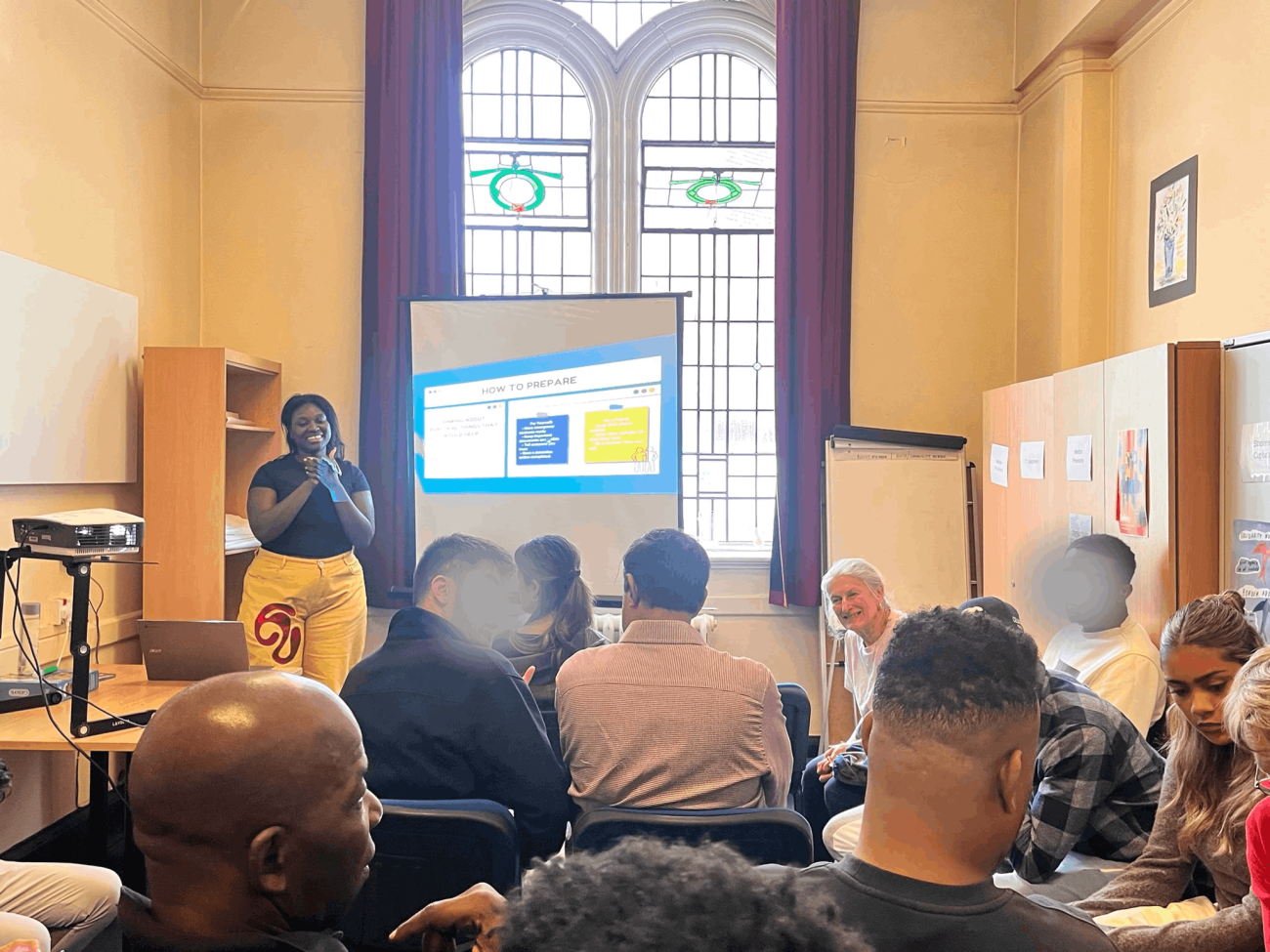
This September, ASSIST delivered our first Know Your Rights workshop, bringing over 20 members and 10 volunteers together to learn about immigration detention, understand their rights and build shared knowledge.
At a time of increasing immigration enforcement and rising hostility towards people seeking sanctuary, we believe this kind of learning and conversation is more important than ever.
Constructing knowledge together
The workshop focused on making information about immigration detention accessible, practical and useful. Participants explored:
- What immigration detention is and why someone may be detained.
- The rights and safeguards that apply to people in detention.
- Practical steps people can take to prepare in advance.
- What to expect if someone is detained.
- How friends, volunteers, community members and organisations can respond and offer support.
- Where to find further information, advice and legal support.
It was followed by individual Help Desk conversations, empowering participants to discuss personal concerns and receive more tailored information.
This combination of group learning and one-to-one support allowed the session to respond to both collective questions and individual circumstances. Rana, a Help Desk volunteer who attended and photographed the session, offered her reflections:
The day created an important opportunity for participants to receive accessible information, ask questions and seek guidance in a welcoming environment
She also highlighted the importance of how information was shared:
Information was presented clearly and respectfully, recognising that immigration procedures and official appointments can often be complex and stressful
_0.png)
Why Know Your Rights matters now
Immigration detention does not happen in isolation. It sits within a wider system of immigration enforcement that is expanding nationally. The latest Home Office statistics show that 22,037 people entered immigration detention in the year ending June 2026, a 2% rise from the previous year. The longer-term increase has been partly enabled by the expansion of detention capacity over the last two years to facilitate removals, including the opening of Campsfield House Immigration Removal Centre. Statistics also show 2,152 people were being held under immigration powers, 19% more than a year earlier and the highest figure since June 2018.
Right to Remain has documented a sharp increase in raids, arrests and detention since the Labour Government took office, alongside the growing fear and uncertainty experienced by affected communities. Their updated guidance stresses the importance of clear, reliable information because detention can happen suddenly and its impact extends far beyond the individual who is detained.
For people seeking sanctuary and migrants, detention can mean sudden separation from friends, family, communities and support networks. It can also happen alongside uncertainty over a person's legal status and their ability to remain in the UK. At ASSIST, we see the devastating impact of this hostile system every day.
The members we work alongside can experience prolonged uncertainty, destitution, separation from community and the constant threat of immigration enforcement. This is why we believe and champion knowledge as a form of collective power.
Understanding your rights cannot remove the injustice built into the immigration system. But it can help people feel less isolated, better prepared and more able to respond to difficult circumstances. It also gives friends and communities the knowledge they need to stand in solidarity with one another.
Standing together against detention and mass asylum accommodation
Our Know Your Rights workshop is a vital piece in the wider ASSIST's work challenging the systems that place people seeking sanctuary at risk of detention, destitution and isolation.
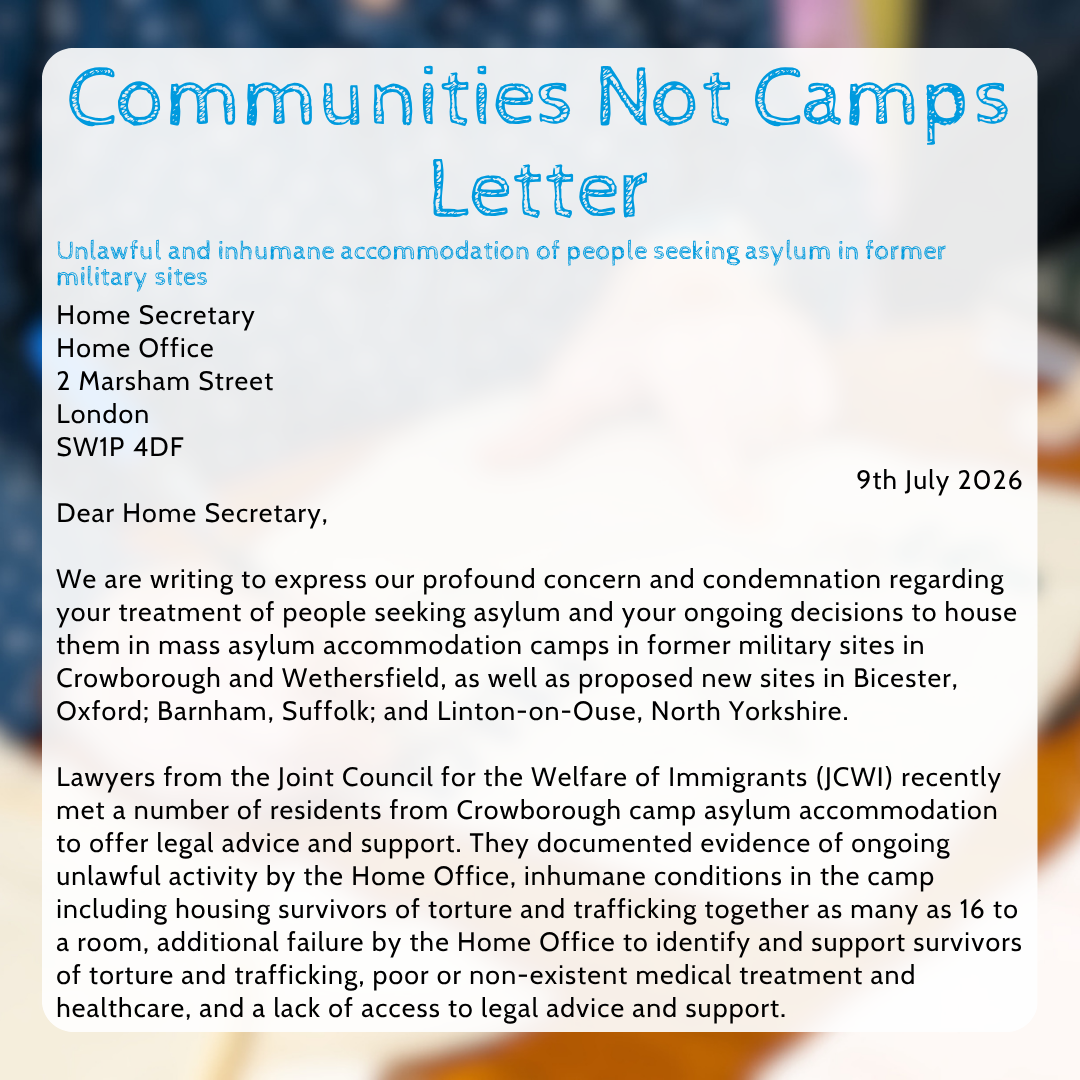
In July this year, ASSIST joined the Joint Council for the Welfare of Immigrants (JCWI) and more than 40 migrant justice and human rights organisations in writing to the Home Secretary, calling for an end to the Government's use of prison-like mass asylum accommodation on former military sites.
Many people housed in these camps are survivors of torture, trafficking and persecution, yet face overcrowding and limited access to healthcare, legal advice and other essential support.
The Government is currently using former military sites at Crowborough and Wethersfield to house people seeking asylum, while seeking to extend their use and develop further sites. People seeking sanctuary should be housed in communities, not isolated in prison-like camps. At the same time, the expansion of immigration detention is continuing.
The Home Office has sought permission to more than double the size of Campsfield House Immigration Removal Centre, increasing its capacity from 160 to 400 places. The public consultation closed on 24 July, but the campaign against the proposed expansion continues.
.png)
What comes next?
This was our first Know Your Rights workshop, and it’s only the start of more to come. Future sessions will explore other areas of immigration and asylum law and policy, responding to the questions, experiences and needs of ASSIST members. We want these workshops to be spaces for shared learning rather than one-way information delivery, where people can bring their own knowledge and experiences, ask difficult questions and learn together.
This reflects our commitment to working alongside members to navigate hostile systems and build community power through trust, belonging and collective learning. Knowledge should not exist solely with professionals or institutions. Communities affected by these systems have expertise, experience and insight that should be valued.
A huge thank you to Sarah (ASSIST's Client Support Manager) and the ASSIST Help Desk team, including Rana, for contributing to this article and documenting the workshop. We are also thankful to everyone who participated, asked questions, shared their experiences, and to our members and volunteers who kindly documented the day through photographs and reflections.
Learn more and take action
There are many ways to grow your understanding of immigration detention and stand alongside people affected by it.
- Right to Remain's updated Key Guide on Immigration Detention provides practical information about detention, rights and safeguards, preparing for the possibility of detention, and supporting someone in your community.
- The Coalition to Close Campsfield campaigns against immigration detention and organises ongoing demonstrations outside Campsfield House Immigration Removal Centre.
- The No To Hassockfield Campaign organises demonstrations and actions against the detention of women at Derwentside Immigration Removal Centre.
- The National Week of Solidarity to End Immigration Detention will take place from 18 to 25 October 2026. Save the date and stay informed about actions happening in your community, as people across the country unite to advocate for an end to immigration detention.
Building solidarity starts with building knowledge.
.png)